Goldstar Diamond v LIC: NCDRC Orders ₹5.30 Cr Agent Fraud Refund
An insurer cannot pocket your premium cheques, ignore its own KYC rules, and then deny a refund by blaming a rogue agent. On 16 November 2026, the NCDRC ordered LIC to refund ₹5,30,07,910 with interest and costs to Goldstar Diamond Pvt. Ltd.
Case at a glance
Order at a glance
An insurer cannot pocket your premium cheques, ignore its own KYC rules, and then deny a refund by blaming a “rogue agent.” On 16 November 2026, in M/s. Goldstar Diamond Pvt. Ltd. v. Life Insurance Corporation of India Ltd. & Ors. (NC/CC/454/2013), the National Consumer Disputes Redressal Commission (NCDRC), New Delhi—comprising President Justice A.P. Sahi and Member Bharatkumar Pandya—ordered LIC to refund ₹5,30,07,910 to a Mumbai diamond exporter whose employee-insurance renewal premiums were diverted by a licensed LIC agent.
Direct Answer: On 16 November 2026, in Goldstar Diamond Pvt. Ltd. v. LIC & Ors. (NC/CC/454/2013), the NCDRC ruled for the policyholder company. It ordered LIC to refund ₹5,30,07,910 with 6% annual interest from 27 December 2013 (9% after three months) and ₹1,00,000 costs, holding insurers vicariously liable for retained premiums diverted amid branch KYC failures.
What happened in Goldstar Diamond v. LIC?
Between 2005 and 2007, Goldstar Diamond Pvt. Ltd. (formerly R. T. Diamond Pvt. Ltd.) acquired employee welfare policies under LIC’s Employer-Employee Scheme (Jan Raksha Plan 91 and Bima Gold Plan 174) through licensed LIC agent Chetan Desai (Agency Code 151922, Branch 91Q, Jogeshwari East, Mumbai). The company paid ₹86,28,820 for those initial policies, which were not in dispute.
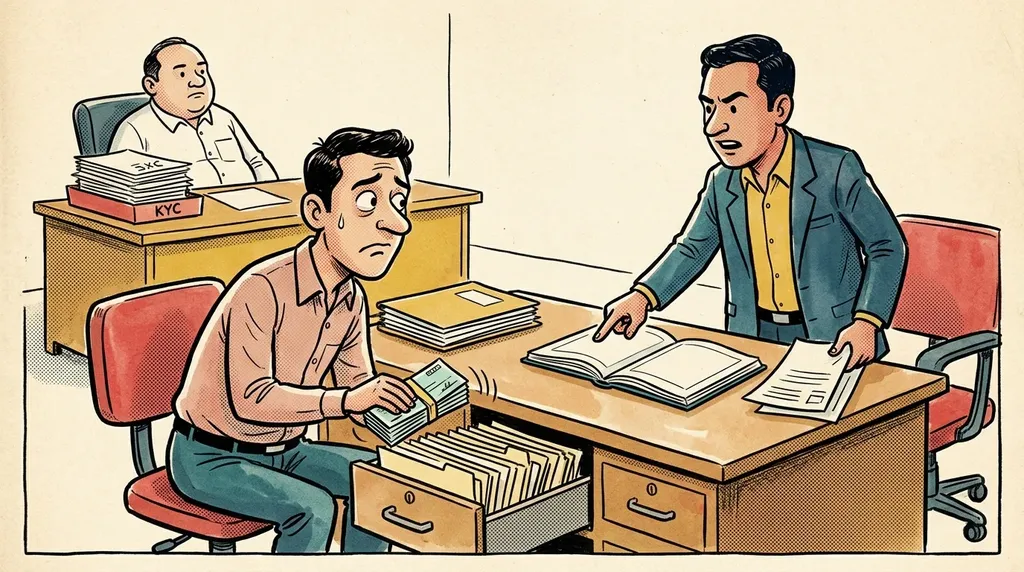
In July 2007, Desai persuaded the company to pay “post advance renewal premiums” to keep the existing policies active and earn extra bonus and loan benefits. Relying on him, the company passed a Board resolution on 7 August 2007 and issued cheques in favour of LIC—never in Desai’s personal name. Every cheque was cleared and credited to LIC’s bank account.
Instead of renewing the 2005–2007 policies, Desai diverted the money to issue thousands of fresh policies, forged Board resolutions, and handed the company fabricated annual “Certificate of Payments” totalling ₹5,30,07,910 across FY 2008–09 (₹1,36,71,800), FY 2009–10 (₹2,84,95,110), and FY 2010–11 (₹1,08,41,000). Meanwhile, most of the original policies lapsed without recorded lapse notices.
Form 300 vs Form 340: How the Employer-Employee scheme trap worked
Desai had promised that all policies would be assigned to the company after 3–5 years and that survival benefits would flow back to the employer. In April 2012, the company learned for the first time from LIC’s Senior Branch Manager that the policies could never be assigned because of the proposal form used:
- Form 300 (Proposal for Insurance of Own Life): Used by Desai for the proposals, treating each employee as proposing on their own life—meaning 261 survival benefit cheques were drawn in individual employees’ names and went stale.
- Form 340 (Proposal for Insurance for the Life of Another): Required when an employer proposes on an employee’s life to retain ownership and assignment rights.
- Keyman Policy Loan Diversion: Desai also fraudulently obtained a ₹28,75,000 loan against Director Sanjay Shah’s Keyman policies (nos. 893000685 and 893000686) and passed the cheque off to the company as an employee survival benefit.
Is an insurer liable for an agent’s fraud?
Yes—when the agent acts in the ordinary course of soliciting insurance business and the insurer credits, retains, and benefits from the policyholder’s cheques. The NCDRC examined the principal-agent relationship under Section 182 and Section 238 of the Indian Contract Act, 1872 and refused to let LIC distance itself from Desai.
LIC had licensed Desai, accepted proposals negotiated by him since 2005, paid him lakhs in commissions, and later terminated his agency on 31 May 2014 under Rules 16(1)(a)(b)(d) and 19(1) of the LIC of India (Agents) Regulations, 1972. By retaining the ₹5.30 crore credited to its accounts even after discovering the fraud, LIC effectively ratified the transaction.
If the agent committed some fraud with the LIC, the Corporation by retaining the amount continues to ratify the said fraud and would therefore be liable directly as well as vicariously for the acts and omissions of the OP-2.
Why Harshad J. Shah did not save LIC
LIC relied heavily on Harshad J. Shah & Anr. v. LIC of India (1997) 5 SCC 64 and Regulation 8(4) of the 1972 Regulations to argue that an agent has no authority—actual or apparent—to collect premiums. The NCDRC distinguished Harshad J. Shah on two clear grounds:
- Cheques were drawn in LIC’s name: Goldstar Diamond never paid cash or issued cheques to Chetan Desai; all cheques were payable to LIC and credited directly to LIC’s account.
- Self-defeating defence: The Commission noted that if LIC claimed the premium collection was “unauthorised,” LIC had no legal right to retain the money in its accounts.
Why LIC’s own KYC failure sealed its liability
LIC’s own internal investigation reports dated 22 June 2012 and 12 November 2012 recorded glaring lapses at Branch 91(Q). Proposals were completed in bulk at the branch level without KYC verification, using the employer’s office address for thousands of employees, and without proper underwriting or dispatch records for lapse notices.
When LIC tried to cite a ₹10,000 micro-insurance KYC exemption under Clause 4.1.1(v) of its 12 October 2009 KYC/AML Guidelines, the NCDRC rejected it outright. Under Clause 4.1.3, jewellery and diamond merchants are classified as High Risk Customers, and Clauses 4.1.8 and 4.5 mandate strict branch-level AML/KYC scrutiny—making the branch’s failure an admitted deficiency in service.
Can a private company file a consumer complaint?
Yes. LIC objected that Goldstar Diamond Pvt. Ltd., being a private limited company, was not a “consumer” under Section 2(1)(d) of the Consumer Protection Act, 1986 (pari materia with Section 2(42) of the Consumer Protection Act, 2019). The NCDRC rejected this preliminary objection on 15 January 2025 and reaffirmed it in the final order.
Relying on the Supreme Court’s rulings in National Insurance Co. Ltd. v. Harsolia Motors & Ors. (2023) 8 SCC 362, Karnataka Power Transmission Corp. v. Ashok Iron Works Pvt. Ltd. (2009) 3 SCC 240, and Kozyflx Mattresses Pvt. Ltd. v. SBI General Insurance Co. Ltd. 2024 (7) SCC 140, the Commission held that a company is a “person” and that buying employee welfare insurance is a risk-indemnity service—not a profit-generating commercial activity.
Can NCDRC decide fraud cases in summary jurisdiction?
LIC argued that allegations of forgery and fraud—already pending in a criminal trial (EOW CR No. 81/2013) and a civil recovery suit filed by LIC against Desai (Suit No. 266/2017, renumbered Suit No. 2492/2024)—could not be tried summarily. Citing Dr. J.J. Merchant v. Shrinath Chaturvedi (2002) 6 SCC 635 and CCI Chambers Coop. Hsg. Society Ltd. v. Development Credit Bank Ltd. (2003) 7 SCC 233, the NCDRC disagreed.
Because LIC’s own investigation reports, agency termination order, and civil suit plaint already admitted receipt of the cheques and Desai’s fraud—and never alleged any connivance by Goldstar Diamond—there were no complicated disputed facts requiring a full civil trial.
What the Commission observed
- Goldstar Diamond Pvt. Ltd. is a consumer under the Consumer Protection Act because employee welfare insurance is an indemnity service, not a profit-making commercial activity.
- LIC cannot retain ₹5,30,07,910 credited to its accounts through cheques drawn in its favour while disclaiming responsibility for its licensed agent’s diversion of those funds.
- Branch 91(Q) completed proposals in bulk without adhering to mandatory AML/KYC norms for a High Risk Customer, amounting to clear deficiency in service.
- LIC’s allegation of connivance against the complainant was an unsubstantiated afterthought contradicted by LIC’s own civil suit and criminal complaint.
- LIC was ordered to refund ₹5,30,07,910 with 6% annual interest from 27 December 2013 (9% if unpaid within three months) and ₹1,00,000 as litigation costs.
If your insurer does this to you: Policyholder audit checklist
- Pay only in the insurer’s name and verify official receipts: Never rely on consolidated “certificates of payment” or handwritten acknowledgements from an agent; download individual policy receipts directly from the insurer’s portal.
- Check the proposal form (Form 300 vs Form 340): For Employer-Employee or Keyman arrangements, confirm in writing that the proposal form matches your intended ownership and assignment rights.
- Reconcile policy bonds with bank debits: Match every premium cheque against actual policy numbers, renewal dates, and physical or e-insurance policy bonds.
- Escalate promptly in writing: If premiums are misapplied or policies lapse despite timely payment, file a formal written complaint with the insurer’s Grievance Redressal Officer and preserve all bank clearing proofs.
Samadhan Sarathi
If an insurer has denied a refund, diverted your premiums, or blamed an agent for a lapsed or mis-sold policy, a structured first grievance backed by your payment trail and KYC/regulatory rules is a sound start. The Letter Kit from Samadhan Sarathi drafts it for you and you file it yourself. If you want the whole matter handled, that is Bima Samadhan.
Our guides: claim rejected, grievance letter, escalation letter, Insurance Ombudsman complaint.
Samadhan Sarathi is a private service. It is not the insurer, IRDAI or the Ombudsman. No case outcome is guaranteed, and every matter depends on its own facts.
FAQ
What did the NCDRC order in Goldstar Diamond v. LIC?
On 16 November 2026 in NC/CC/454/2013, the NCDRC directed LIC to refund ₹5,30,07,910 to Goldstar Diamond Pvt. Ltd. along with 6% annual interest from 27 December 2013 until payment (rising to 9% if unpaid within three months) and ₹1,00,000 in litigation costs. The Commission held LIC deficient in service for retaining premiums diverted by its agent amid branch-level KYC failures.
Is an insurance company liable for fraud committed by its agent?
Yes, an insurer can be held directly and vicariously liable under Sections 182 and 238 of the Indian Contract Act, 1872 when a licensed agent acts in the ordinary course of business and the insurer credits and retains the policyholder’s cheques. In Goldstar Diamond v. LIC, the NCDRC ruled that an insurer cannot keep the premium money while disowning the agent’s misconduct.
Can a private limited company file a consumer complaint against an insurer?
Yes, a private limited company qualifies as a person and a consumer under the Consumer Protection Act when it buys insurance to indemnify risks rather than to generate direct commercial profit. Relying on Harsolia Motors and Kozyflx Mattresses, the NCDRC confirmed that employee welfare insurance taken by a company is a consumer-to-business service.
What is the difference between Form 300 and Form 340 in LIC Employer-Employee schemes?
Form 300 is a proposal for insurance on one’s own life, whereas Form 340 is a proposal for insurance on the life of another. Using Form 300 instead of Form 340 prevented Goldstar Diamond from taking assignment of the policies and caused survival benefit cheques to be issued in individual employees’ names instead of the company’s.
Why did Harshad J. Shah v. LIC not protect LIC in this case?
In Harshad J. Shah (1997), the Supreme Court held that LIC agents lack authority to collect premiums under Regulation 8(4) of the 1972 Regulations. The NCDRC distinguished it because Goldstar Diamond’s cheques were drawn directly in favour of LIC, cleared into LIC’s accounts, and retained by LIC while its branch violated mandatory AML/KYC guidelines.
Source: National Consumer Disputes Redressal Commission, New Delhi, Consumer Complaint No. NC/CC/454/2013, pronounced 16 November 2026.
Last updated: 25 November 2026
Legal Disclaimer
Legal Disclaimer: The information provided in this blog article is for general informational purposes only and does not constitute legal advice. The article covers the case M/s. Goldstar Diamond Pvt. Ltd. v. M/s. Life Insurance Corporation of India Ltd. & Ors. (NC/CC/454/2013) as adjudicated by the National Consumer Disputes Redressal Commission, New Delhi on 16 November 2026. The details included, such as the ruling, court observations, and case facts, are based on publicly available records and the Commission’s final order. Readers are advised not to rely solely on the information provided herein for any legal decisions. For specific legal advice or concerns regarding consumer rights or insurance claims, it is recommended to consult with a qualified legal professional. The publisher disclaims any liability for any losses or damages resulting from reliance on the content of this article.
Send them this story. It may help with their claim.


Comments