IRDAI Fines Star Health ₹2 Crore: COVID Claims Rejected as “Hospitalization Not Required”
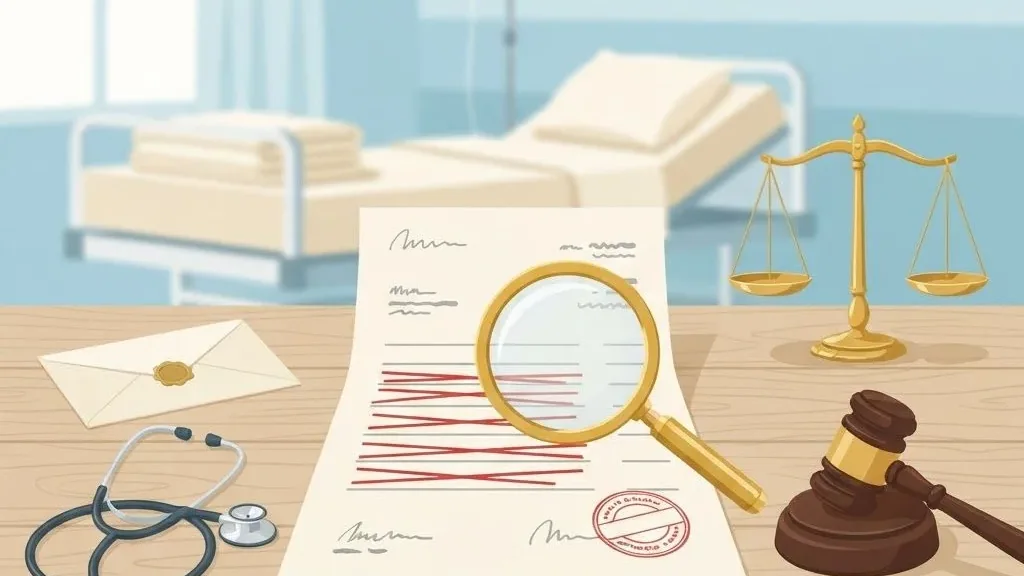
IRDAI issued an order on 20 November 2026 against Star Health and Allied Insurance Co. Ltd., imposing a total penalty of ₹2 crore under Section 102 of the Insurance Act, 1938, over rejected and reduced health claims and how decisions were communicated.
Case at a glance
Order at a glance
In the files IRDAI inspected, a document called the “Bill Assessment Sheet” gave one reason for cutting health claims: “Member Payment vis a vis terms & conditions of the policy issued”. The regulator says it found no term in the policy that allowed deductions on those grounds. On 20 November 2026 the Insurance Regulatory and Development Authority of India (IRDAI) passed its order against Star Health and Allied Insurance Co. Ltd.: a total penalty of ₹2 crore, a warning, cautions and directions.
How the inspection became an order
IRDAI inspected the insurer from 31 January to 11 February 2022. The inspection report went to the insurer on 18 April 2022, and the insurer replied on 25 May 2022. A Show Cause Notice followed on 4 December 2024, and the insurer replied on 10 January 2025.
A personal hearing was held on 18 June 2025, attended by the insurer’s MD & CEO and senior officers, and the insurer sent a further reply on 11 July 2025. After the panel was re-constituted, the insurer was offered a fresh hearing on 10 March 2026. It chose not to take it, saying its facts had been fully presented earlier. The final order, reference IRDAI/E&C/ORD/MISC/153/11/2026, was signed at Hyderabad on 20 November 2026 by the Member (Non-Life) and the Member (F&I) of the Authority.
In its press release of the same date, IRDAI said policyholders “were not informed of the specific policy conditions under which claims were repudiated or reduced”.
Star Health claim rejected: “should have been treated at home”
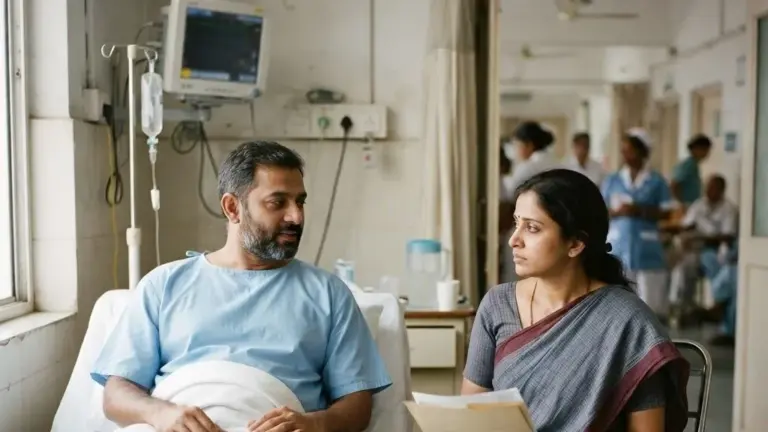
The first ₹1 crore penalty concerns COVID-19 claims. In the sampled cases the insured persons were hospitalised on their treating doctors’ advice. The order says the insurer rejected the claims on the ground that the patient did not need hospital care and “should have been treated at home”. In its letters to policyholders the insurer quoted guidelines of AIIMS and the Health Ministry on treating COVID-19 patients.
The insurer’s side is recorded in the order. It said it relied on WHO, ICMR and AIIMS protocols and state health department rules. It said many hospitals overcharged during the pandemic, and that every COVID claim was repudiated only after review by its in-house Claims Appellate Committee.
IRDAI looked at the insurer’s own policy, the Family Health Optima policy. It pays hospitalisation expenses when a qualified doctor advises in-patient treatment. The order says COVID-19 was an exceptional period, doctors may have taken extra care, and hospitalisation may also have been preferred to isolate the patient and protect family members. “The insurer ought to have considered this,” it says.
The panel asked at the hearing whether the insurer had told the policyholder, in each sample case, why hospitalisation was not required. IRDAI found no proof that it had, and held that the insurer could not justify “hospitalization not required”. It found the claims were handled inconsistently with the policy’s own terms, a violation of Regulation 27(v) of the IRDAI (Health Insurance) Regulations, 2016, which says every claim shall be disposed of according to the terms and conditions of the policy.
Besides the ₹1 crore penalty, the insurer was advised to service all policies according to their terms and conditions, with “no arbitrary deductions/denial” made “without proper justification”.
Deductions with no clause behind them
The second ₹1 crore penalty covers deductions and how decisions were communicated. In the “Bill Assessment Sheet” the reason for deductions was given as “Member Payment vis a vis terms & conditions of the policy issued”. IRDAI found that none of the policy’s terms allowed deductions on those grounds, and when it asked the insurer to point to the clause, the insurer did not give any.
Many deductions were recorded as “Claims Processed as per GIC Rates”. IRDAI held that using General Insurance Council rates to deny or reduce COVID claims, without tying the decision to the applicable policy clause, is harmful to policyholders.
In many sampled cases the insurer reconsidered and paid an additional amount only after the Authority highlighted them. IRDAI said this shows the first decision was not as per the policy terms, and that the insurer reconsidered “as an afterthought”.
After the hearing the insurer sent data on “reasonable and customary” charges. The share of such charges, both in total deductions and in total allowances, was highest in FY 2021-22. IRDAI said this strongly indicates the clause was used as a matter of practice to reduce claim payments, not in isolated cases.
The insurer’s answers are on record too. It said hospitals had overbilled, but IRDAI noted it did not tie the deductions to clauses or to item-wise overbilling. It said no complaints had been filed on the 15 cases before the Ombudsman or any forum, so customers were satisfied. And the sample cases it sent after the hearing, showing policyholders given a detailed breakdown, differed materially from the cases IRDAI had identified, which IRDAI said raised concerns about the accuracy, completeness and reliability of the information.
The letters policyholders did not get
The insurer could not show that its letters were actually sent from its system, and the letters did not tell policyholders which policy conditions were used to reject or reduce the claim. It admitted that, because of a technical error, a covering letter with grievance redressal and Ombudsman details was not sent for a period. It later added a formal covering letter to all claim communication, but IRDAI noted its reply was silent on naming the policy conditions behind a deduction or rejection.
Regulation 33(d)(iv) of the Health Insurance Regulations, 2016 requires that a denial be communicated by the insurer, stating the reasons, referring to the corresponding policy conditions, and giving the insurer’s and the Insurance Ombudsman’s grievance procedures with office addresses. IRDAI found violations of Regulations 27(v), 33(d)(ii) and 33(d)(iv), and of Regulation 21(3)(c)(i)(c) of the IRDAI (Third Party Administrators – Health Services) Regulations, 2016.
deprives the claimants of making an informed decision to challenge the decision of the Insurer
That is how the order describes not giving detailed reasons tied to the policy terms. It adds that the practice significantly harms policyholders by creating confusion and increasing financial stress.
What IRDAI observed
- Claims were rejected as “hospitalization not required” although doctors had advised hospital treatment, and the insurer could not justify that ground.
- No policy term was shown for deductions recorded under the “Bill Assessment Sheet” reason or “GIC Rates”.
- Additional amounts were paid on many sampled claims only after IRDAI highlighted them, and “reasonable and customary” deductions were highest in FY 2021-22.
- Letters did not state the policy conditions used, and the insurer could not show they were sent.
- The insurer’s defence was recorded: it cited WHO, ICMR and AIIMS protocols and said hospitals overbilled.
What insurers must now tell policyholders
The order directs the insurer to make its final settlement letter list each allowed, disallowed, non-payable and discount item, and the amount of Sum Insured reduced after settlement. Denial letters, as Regulation 33(d)(iv) requires, must state the reasons, refer to the corresponding policy conditions, and give the insurer’s and the Insurance Ombudsman’s grievance details with office addresses.
The insurer was also warned under Regulation 20(9) of the TPA Regulations for not ensuring that discounts agreed with network hospitals are reflected in the hospital’s bill, so that the policyholder knows about them. The insurer said it passed on the benefit by protecting the sum insured and negotiating with hospitals.
Cautions, one charge not pressed, and what happens next
IRDAI cautioned the insurer for collecting renewal premium more than 90 days in advance (Regulation 13(iii) of the Health Insurance Regulations). The insurer admitted a technical lapse, fixed it, and noted that a later master circular removed the 90-day limit. It was also cautioned for not giving the Insurance Ombudsman’s name and address when replying to complaints (Regulation 17(2) of the IRDAI Protection of Policyholders’ Interests Regulations, 2017, Annexure I). The insurer’s corrective steps on both were taken on record.
A further charge, on differences in the commission and reward figures reported, was not pressed after the insurer gave a reconciliation.
The penalty is to be paid from the shareholders’ account within 45 days of receiving the order. The order is to be placed before the insurer’s Board, with minutes of the discussion, and an Action Taken Report is due within 90 days of the order. The insurer may appeal to the Securities Appellate Tribunal under Section 110 of the Insurance Act, 1938.
Samadhan Sarathi
If an insurer has rejected or reduced your health claim, a clear first letter that asks for the policy clause behind the decision is a sound start. The Letter Kit from Samadhan Sarathi drafts it for you and you file it yourself. If you want the whole matter handled, that is Bima Samadhan.
Our guides: claim rejected, grievance letter, escalation letter, Insurance Ombudsman complaint. Related on this blog: HDFC ERGO dengue claim ruling.
Samadhan Sarathi is a private service. It is not the insurer, IRDAI or the Ombudsman. Every case depends on its own facts.
FAQ
Who penalised Star Health and how much?
The Insurance Regulatory and Development Authority of India (IRDAI) imposed a total penalty of ₹2 crore under Section 102 of the Insurance Act, 1938, by an order dated 20 November 2026.
What were the main findings?
IRDAI found claims rejected as “hospitalization not required” that the insurer could not justify, deductions not tied to any policy clause, and letters that did not state the policy conditions used.
Did Star Health have to change anything?
Yes. It is directed to itemise allowed, disallowed, non-payable and discount amounts and the Sum Insured reduced in its settlement letters, and the order requires an Action Taken Report within 90 days.
Can the insurer appeal?
Yes. The order says the insurer may appeal to the Securities Appellate Tribunal under Section 110 of the Insurance Act, 1938.
Source: IRDAI Order ref. IRDAI/E&C/ORD/MISC/153/11/2026 dated 20 November 2026 and the IRDAI press release of the same date. Official copy: irdai.gov.in.
Last updated: 22 November 2026
Legal Disclaimer
Legal Disclaimer: The information provided in this blog article is for general informational purposes only and does not constitute legal advice. The article covers the order in the matter of Star Health and Allied Insurance Co. Ltd. (Ref. IRDAI/E&C/ORD/MISC/153/11/2026) as passed by the Insurance Regulatory and Development Authority of India on November 20, 2026. The details included, such as the findings, observations, and facts, are based on publicly available records and the regulator’s final order. Readers are advised not to rely solely on the information provided herein for any legal decisions. For specific legal advice or concerns regarding consumer rights or insurance claims, it is recommended to consult with a qualified legal professional. The publisher disclaims any liability for any losses or damages resulting from reliance on the content of this article.
Send them this story. It may help with their claim.

Comments